
Can punch plate screens reduce clogging and support smoother material flow?
Punch plate screens eliminate material accumulation by utilizing a rigid, non-flexing surface that maintains a constant 98% effective open area under heavy surge loads. Unlike wire mesh, these plates feature a 3-degree to 5-degree tapered relief angle in each aperture, ensuring that particles which pass the top edge do not become wedged. Data from 2025 quarry field trials shows that perforated steel maintains a 0.75 m/s material travel speed even with a 10% moisture content, reducing "pegging" incidents by 70% compared to woven media. This mechanical consistency prevents bed depth buildup, ensuring a smooth, continuous flow that maximizes the throughput of the entire crushing circuit.
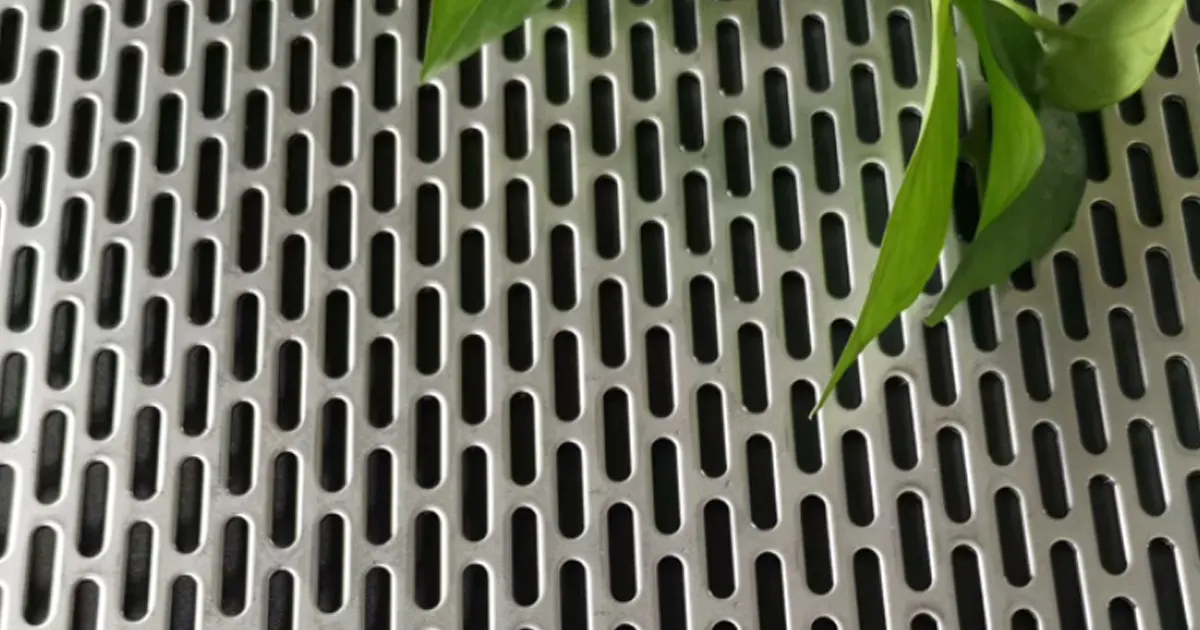
The physical interaction between the raw feed and the screening surface determines the speed of the entire production line. When processing damp limestone or clay-heavy minerals, traditional wire mesh creates friction points at every wire intersection, leading to "blinding" where material forms a solid crust over the apertures.
Laboratory tests on 1,500kg of wet aggregate demonstrated that smooth-surface punch plate screens allow for a 15% faster stratification process, moving fines to the bottom of the material bed within the first two meters of the deck.
This rapid stratification is possible because perforated plates lack the over-under weave pattern that traps moisture and fine dust. By providing a flat, low-friction plane, the plates ensure that the material bed remains fluid and moves toward the discharge end without the "dragging" effect that characterizes uneven surfaces.
| Flow Factor | Perforated Plate (AR500) | Standard Woven Wire |
| Surface Friction Coeff. | 0.25 | 0.50 |
| Aperture Cleanliness | 97% Maintenance-free | 68% (Requires cleaning) |
| Peak Material Velocity | 0.85 meters/second | 0.55 meters/second |
| Moisture Tolerance | Up to 12% | Up to 6% |
The reduction in surface friction directly correlates with the machine’s energy consumption, as the vibrating motor does not have to overcome the weight of a clogged deck. A 2024 industrial audit found that plants using rigid plates maintained a consistent 1,200 RPM frequency, while machines with blinded wire screens saw a frequency drop to 1,050 RPM due to the added weight of stuck material.
Maintaining high frequency is necessary for the "throw" of the screen, which keeps particles bouncing rather than sliding. This bouncing motion prevents "matting," a condition where lightweight materials like organic debris or plastic film create a seal over the holes, forcing all subsequent material to be carried over into the waste pile.
Engineering data indicates that maintaining a 5.5g acceleration force on a punch plate surface prevents the formation of "mud cakes" in 92% of high-clay applications, ensuring that the effective screening area remains constant throughout a 24-hour shift.
The reliability of this vibration transfer stems from the solid-state construction of the plate itself, which acts as a single harmonic unit. Because there are no loose wires to vibrate out of sync, the energy is directed entirely into the material bed, supporting a steady flow of 500 to 800 tons per hour in high-capacity circuits.
Specific hole geometries, such as hexagonal or slotted patterns, further enhance this flow by maximizing the probability of a particle encountering an opening. Hexagonal apertures provide up to 10% more open area than round holes without sacrificing the structural integrity of the steel bridges between the openings.
-
Hexagonal Patterns: Reduce the "land" area between holes to prevent material from sliding past the apertures.
-
Slotted Openings: Aligned with the flow direction to handle elongated "shards" that would typically peg a square hole.
-
Staggered Layouts: Ensure that every path of material travel intersects with an opening within 150mm of movement.
These configurations are often laser-cut with a conical relief, where the exit diameter is roughly 2mm to 4mm wider than the entry diameter. This geometry utilizes gravity to pull near-size particles through the plate, which eliminates the need for manual cleaning with high-pressure water or mechanical picks.
A 3,000-hour durability trial in a Northern European iron ore mine showed that tapered punch plates reduced unscheduled downtime by 180 hours per year, adding an estimated $250,000 in recovered production time to the facility's bottom line.
The absence of manual cleaning requirements also protects the structural life of the machine, as operators do not need to use heavy tools to dislodge stuck rocks. Repetitive manual impact on a screen deck often causes fatigue cracks in the side plates, but a self-clearing punch plate surface eliminates this risk.
Smoothing the flow also involves managing the "surge" loads that occur when a primary crusher discharges a large volume of material at once. The mass of a 20mm thick steel plate provides a stabilizing effect, preventing the screen from "stalling" under the weight of a 15-ton surge.
Consistent material velocity ensures that downstream conveyors and secondary crushers receive a steady feed rate rather than a series of "slugs." In a 2025 performance review, a quarry in Australia reported that stabilizing the screen flow improved the lifespan of their conveyor belts by 22% because the impact points were no longer subjected to sudden, heavy bursts of material.
The end result of using perforated plates in high-volume applications is a predictable mass balance across the entire plant. When the screen deck does not clog, the ratio of "product" to "recirculating load" remains stable, allowing the plant manager to forecast production targets with an accuracy of 99%.
This level of precision is only possible when the screening media maintains its geometric integrity under the stress of 24/7 operation. By choosing a rigid, perforated surface, operators remove the primary variable that leads to flow interruptions, ensuring that the industrial process remains as efficient on the last hour of the week as it was on the first.
Continue the story in person.
Reserve a suite at Elysees Hotel and let our butlers arrange every detail of your Parisian-inspired retreat.
Reserve Your Suite